XXL playful installations | Large-scale family games to activate new climate narratives
XXL playful installations | Large-scale family games to activate new climate narratives
↗ Sustainability
A collection of outdoor playful installations that turn major climate challenges into large-scale family games. An experience designed to learn, share and activate new ways of imagining how we care for our planet.
- Sustainability
- Social impact
- Product and service design
- New narratives
Challenge: Turning environmental awareness into a shared play experience
Talking about climate change is not always easy, especially when addressing a family and intergenerational audience. It is often perceived as a distant, complex challenge, too vast for us to feel that our actions can have a real impact.
At dot., we approached the project by combining product design, gamification and new climate narratives. We worked on the full development of each installation: from the conceptual definition and participation dynamics to the graphic and industrial design of the physical elements that shape the experience.
Solution: A collection of large-scale games that encourage learning through play
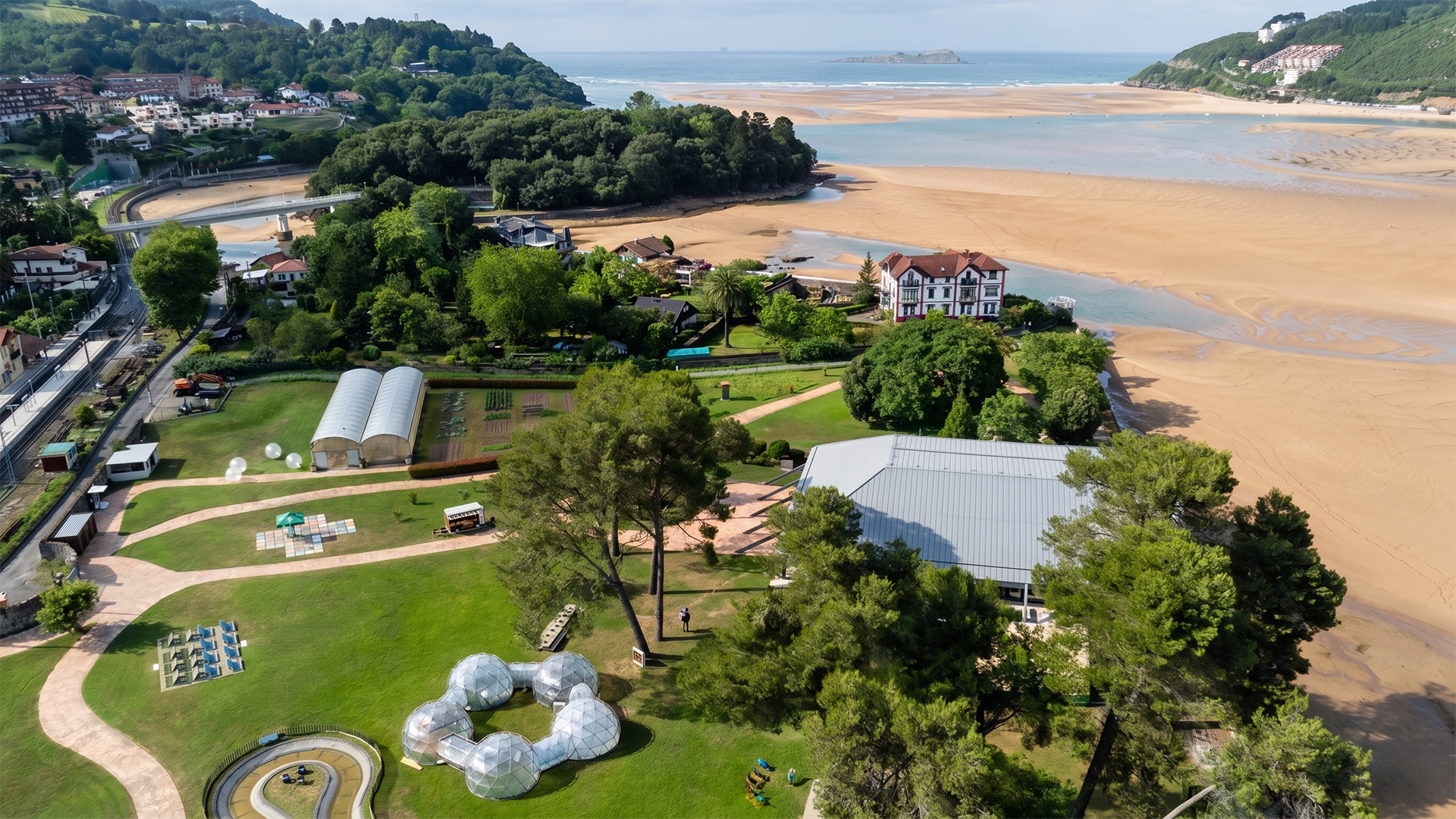
From design through to production and installation, we developed a collection of outdoor playful installations that turn sustainability into a physical, intuitive and shared experience. These large-scale games invite families to participate, learn through action and spark conversations around major environmental challenges such as decarbonisation, biodiversity loss, ocean pollution and the need for new climate role models.
Each installation has its own identity and offers an independent play experience. Together, however, they build a playful ecosystem made up of physical, visual and narrative challenges that allow people to approach the climate crisis from different perspectives.
Guess who?: Making diverse climate role models visible
There are people who, through their work and dedication, have helped imagine and build a better planet for future generations. From fields such as biodiversity protection, ecosystem regeneration, wildlife conservation, science, activism and public engagement, they are all climate role models capable of inspiring new ways of inhabiting and coexisting with the planet.
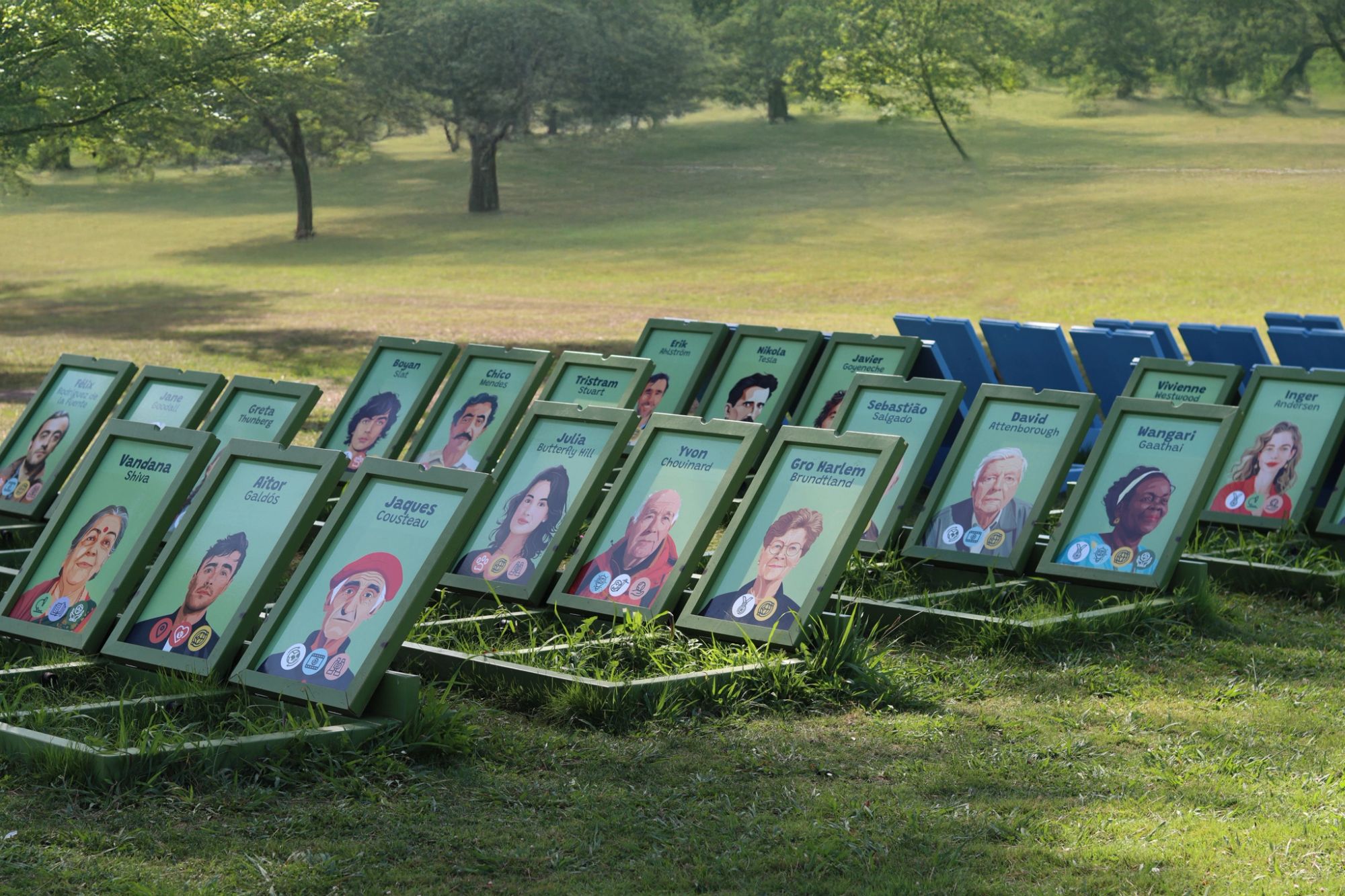
Inspired by the mechanics of the classic game “Guess who?”, we designed an XXL outdoor installation that turns the biographies of icons such as Greta Thunberg, Wangari Maathai, Jacques Cousteau and Vivienne Westwood into a collaborative game for all ages. The dynamic no longer focuses on the characters’ physical appearance, but invites players to discover them through their actions, achievements and ways of living on and contributing to the planet.
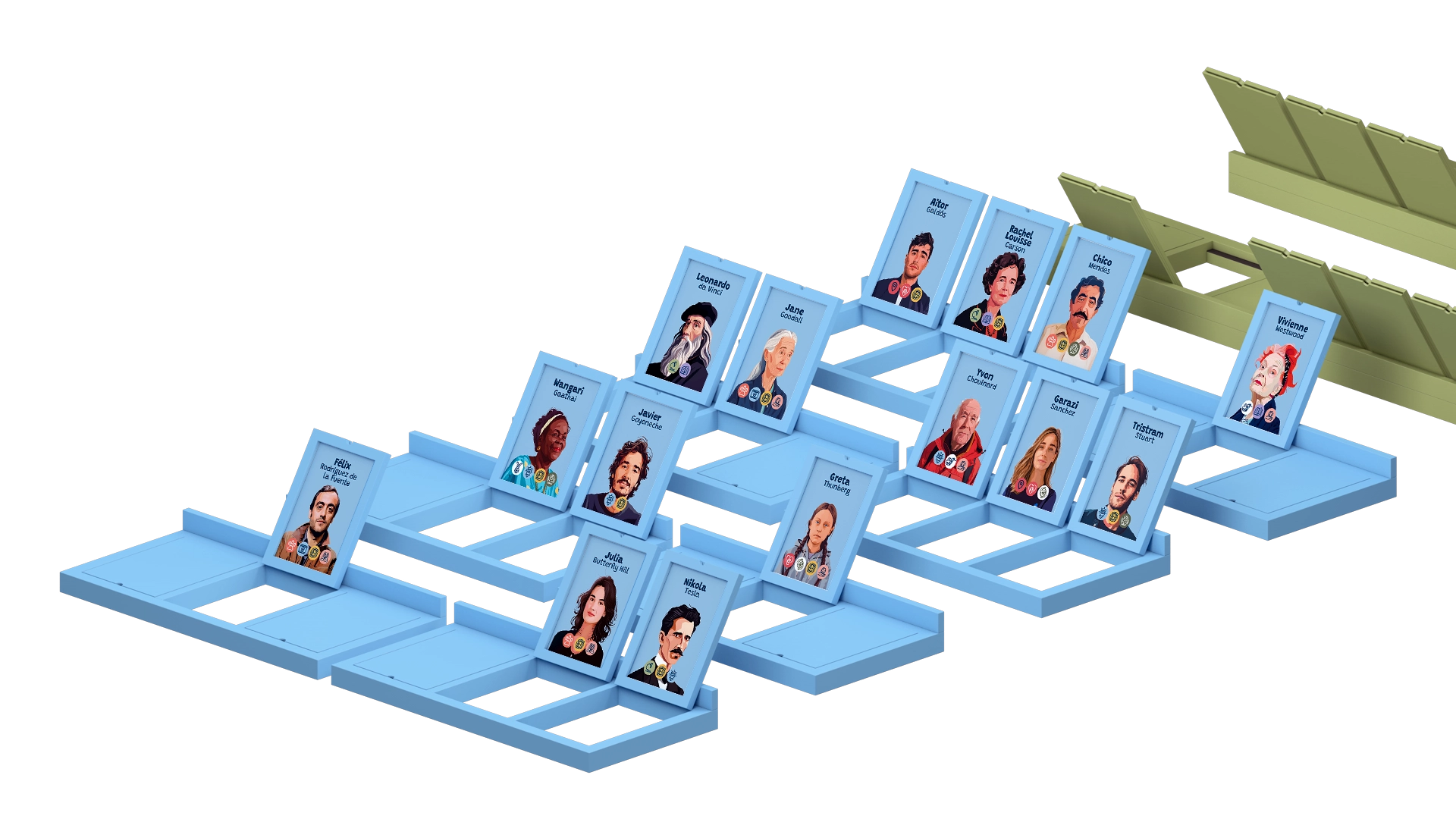
The questions shift accordingly: Has this person made an important discovery about nature? Have they written a famous book about caring for the planet? Have they led a campaign in favour of the climate?
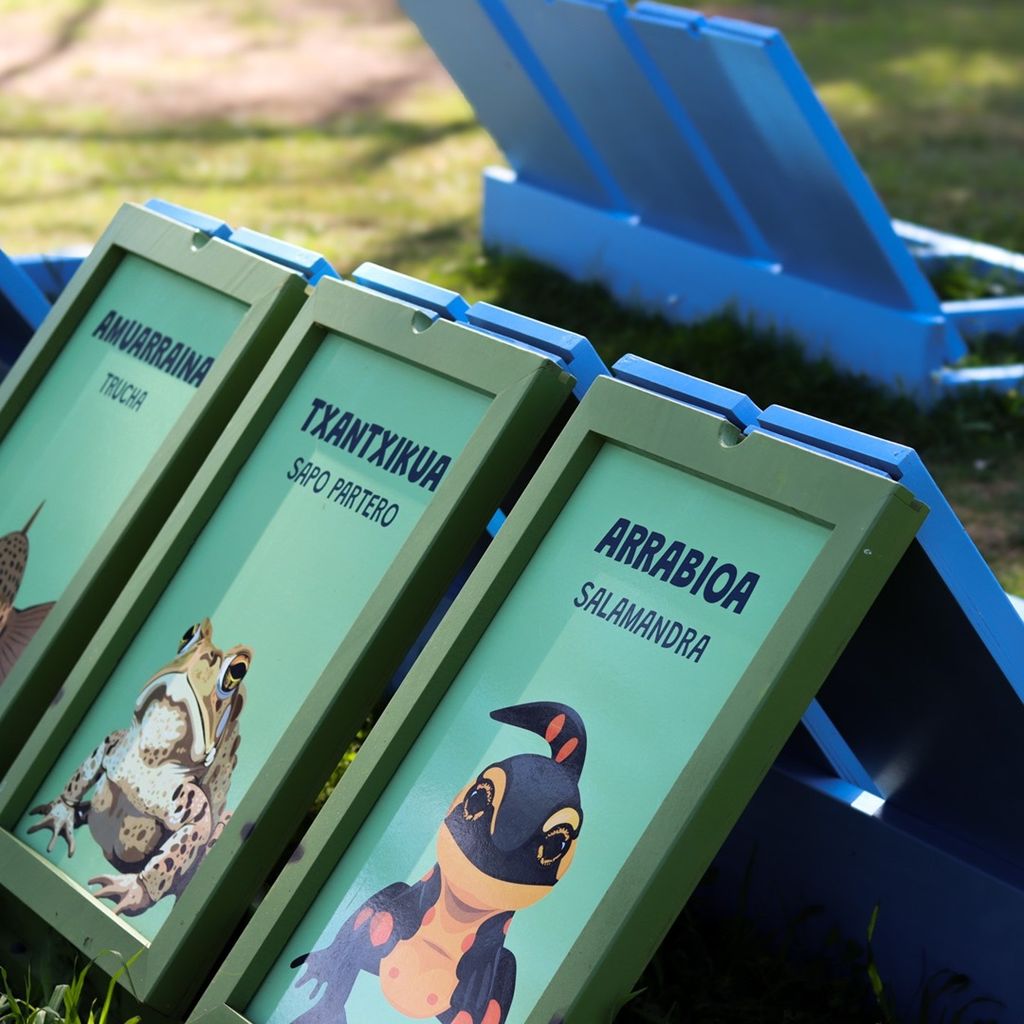
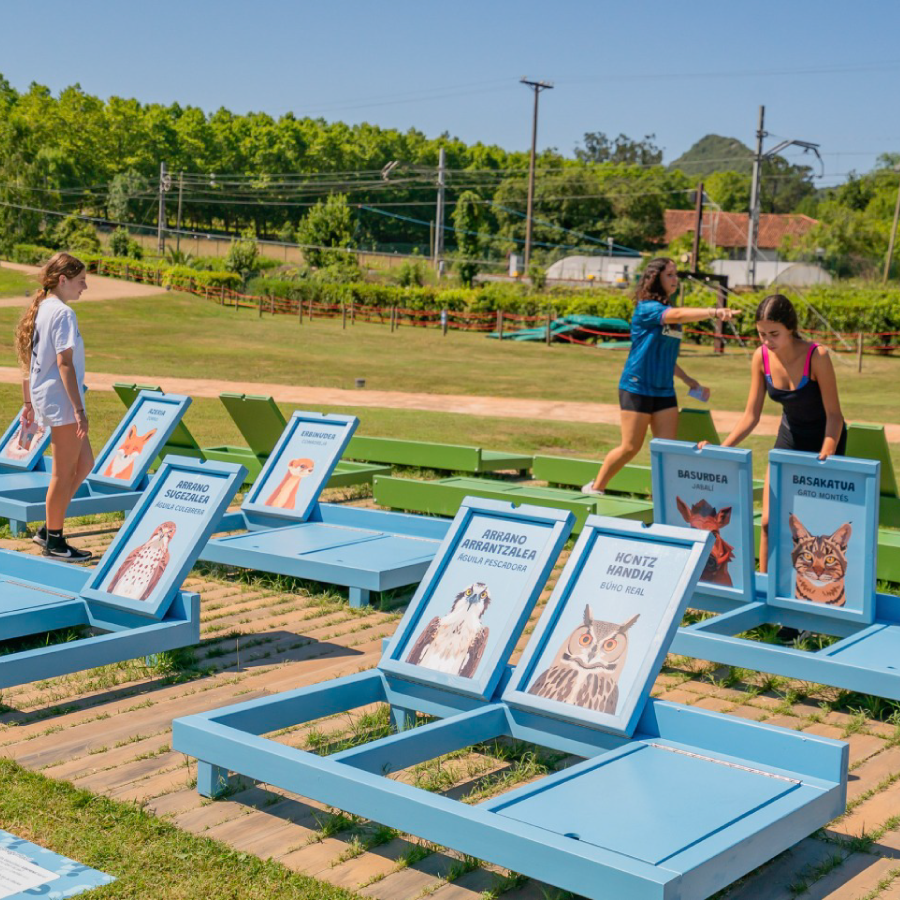
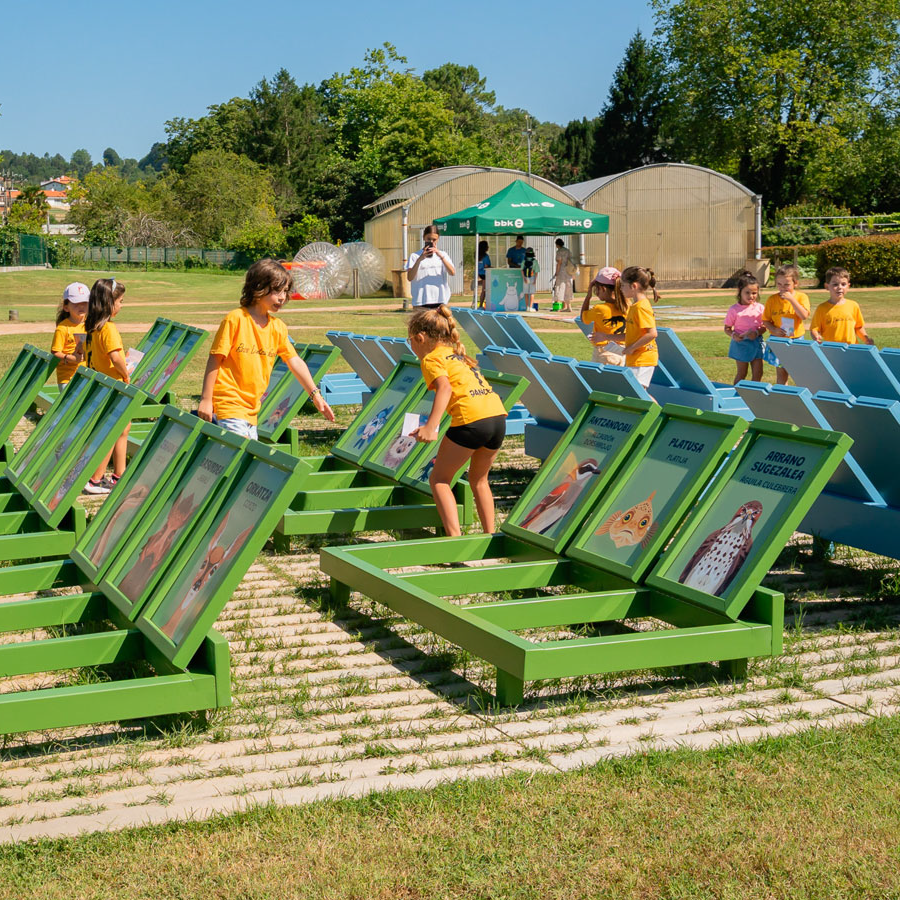
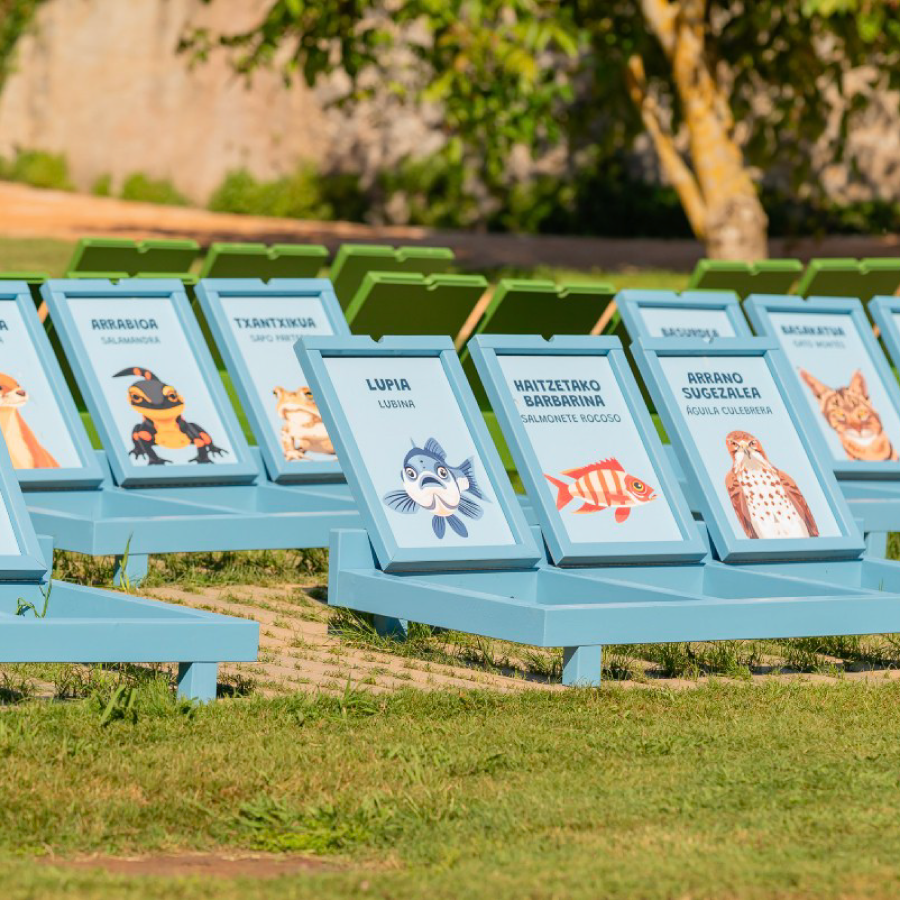
The game also includes a version dedicated to local fauna, inviting players to get to know the animals of Euskal Herria better and reinforcing a simple idea: knowing what surrounds us is the first step towards appreciating and caring for it.


Plastic islands: Understanding marine pollution through biodiversity care
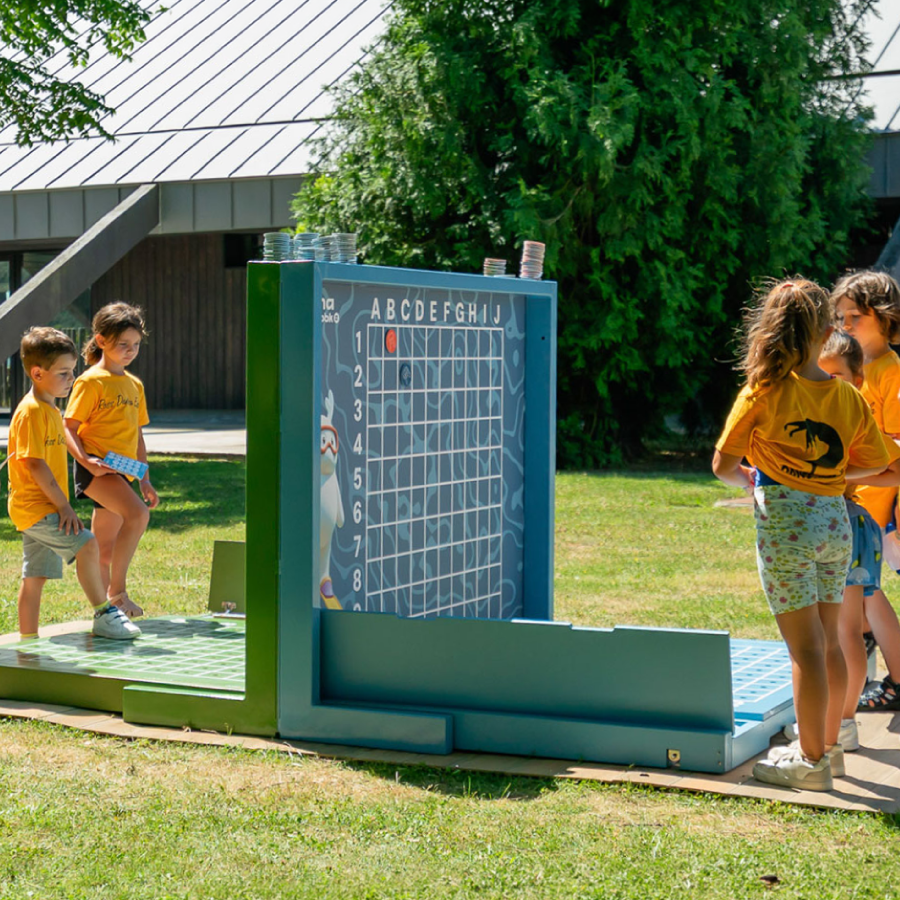
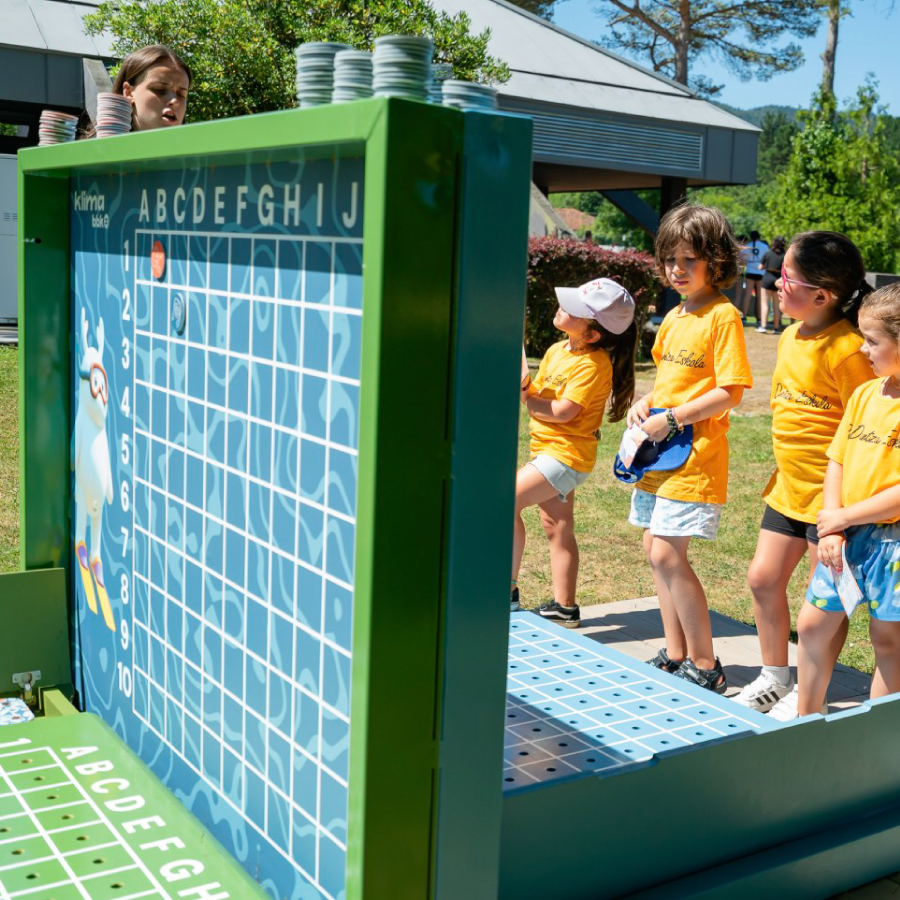
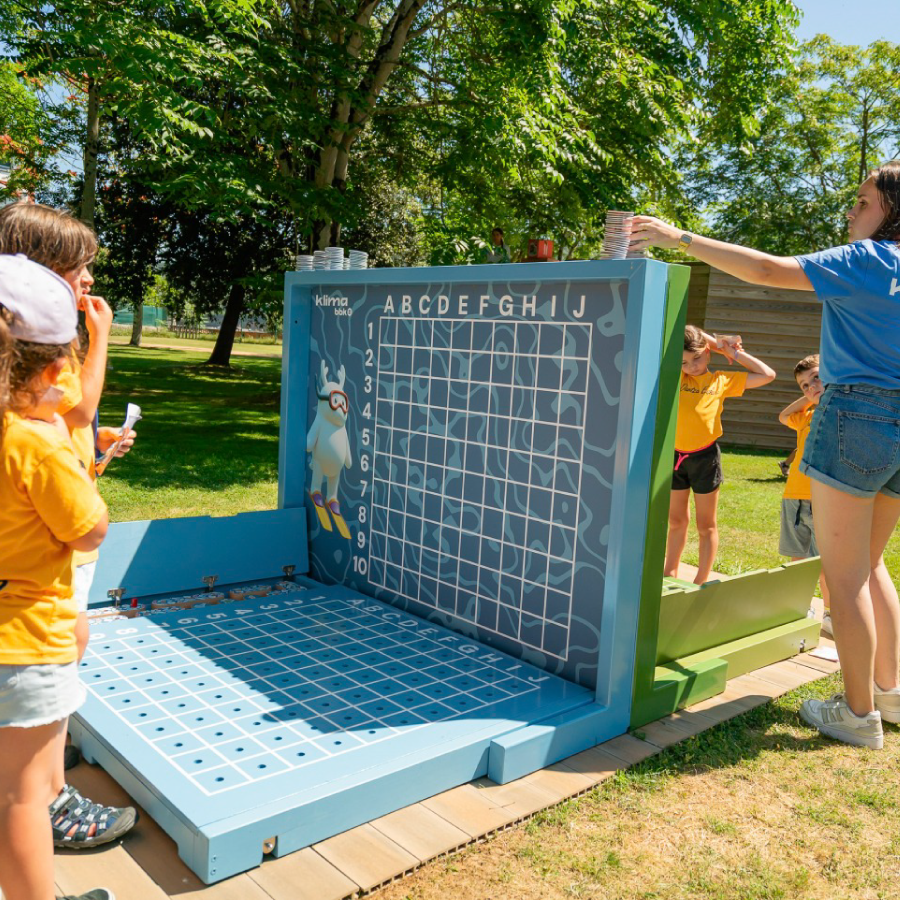
This installation reinterprets the logic of “Battleships” to address marine pollution. Each team must locate and clean up the plastic islands hidden in their opponent’s ocean, while also discovering the marine animals that inhabit that ecosystem.
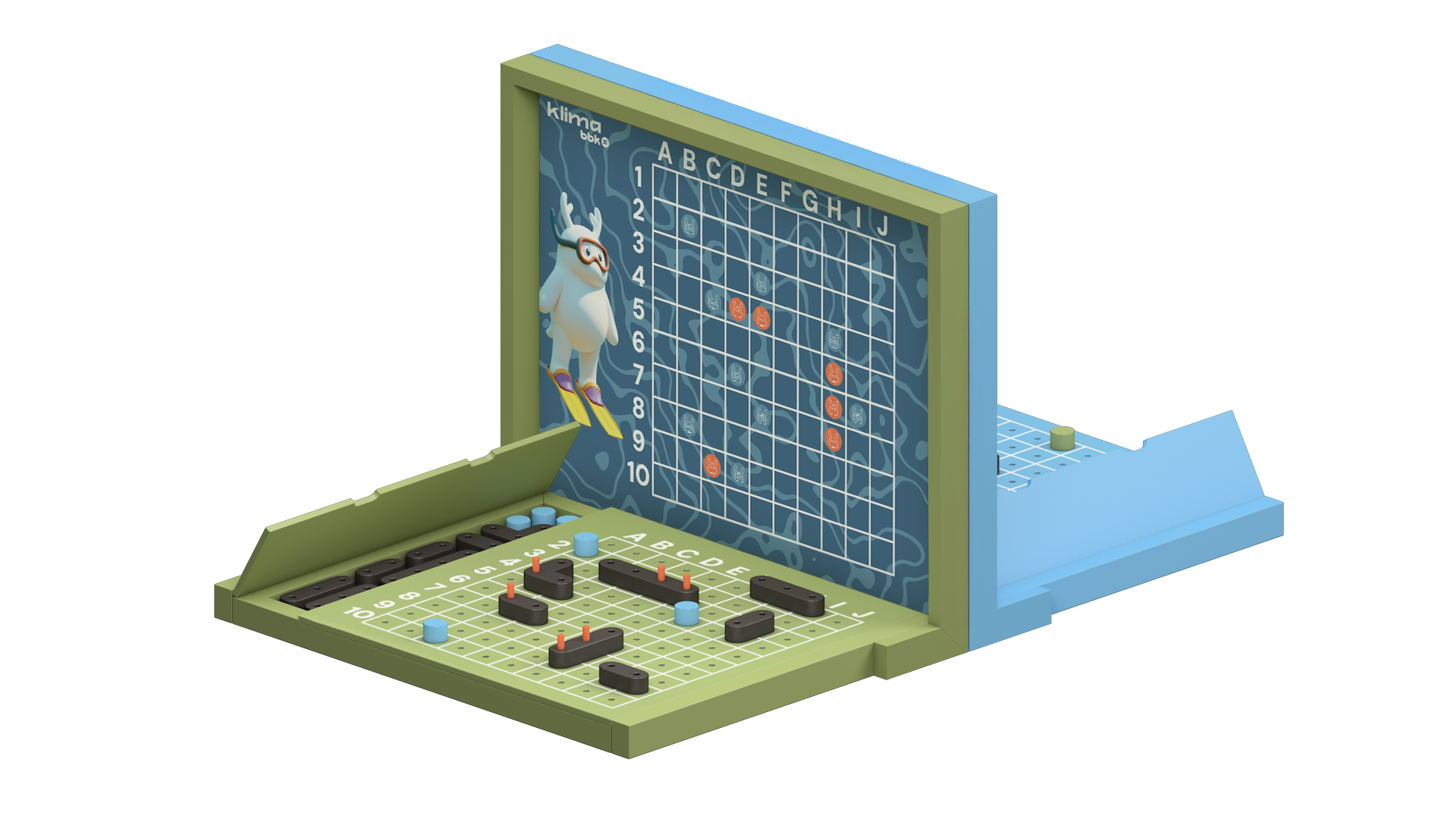
Through a robust structure made of wood and steel, magnetic panels, wooden pieces and marking magnets, the installation turns plastic pollution into a visual and participatory experience. Through play, it invites participants to understand that caring for the oceans means identifying the problem, acting on it and protecting the life that inhabits them.
Decarbonisation: Turning emissions reduction into collective action
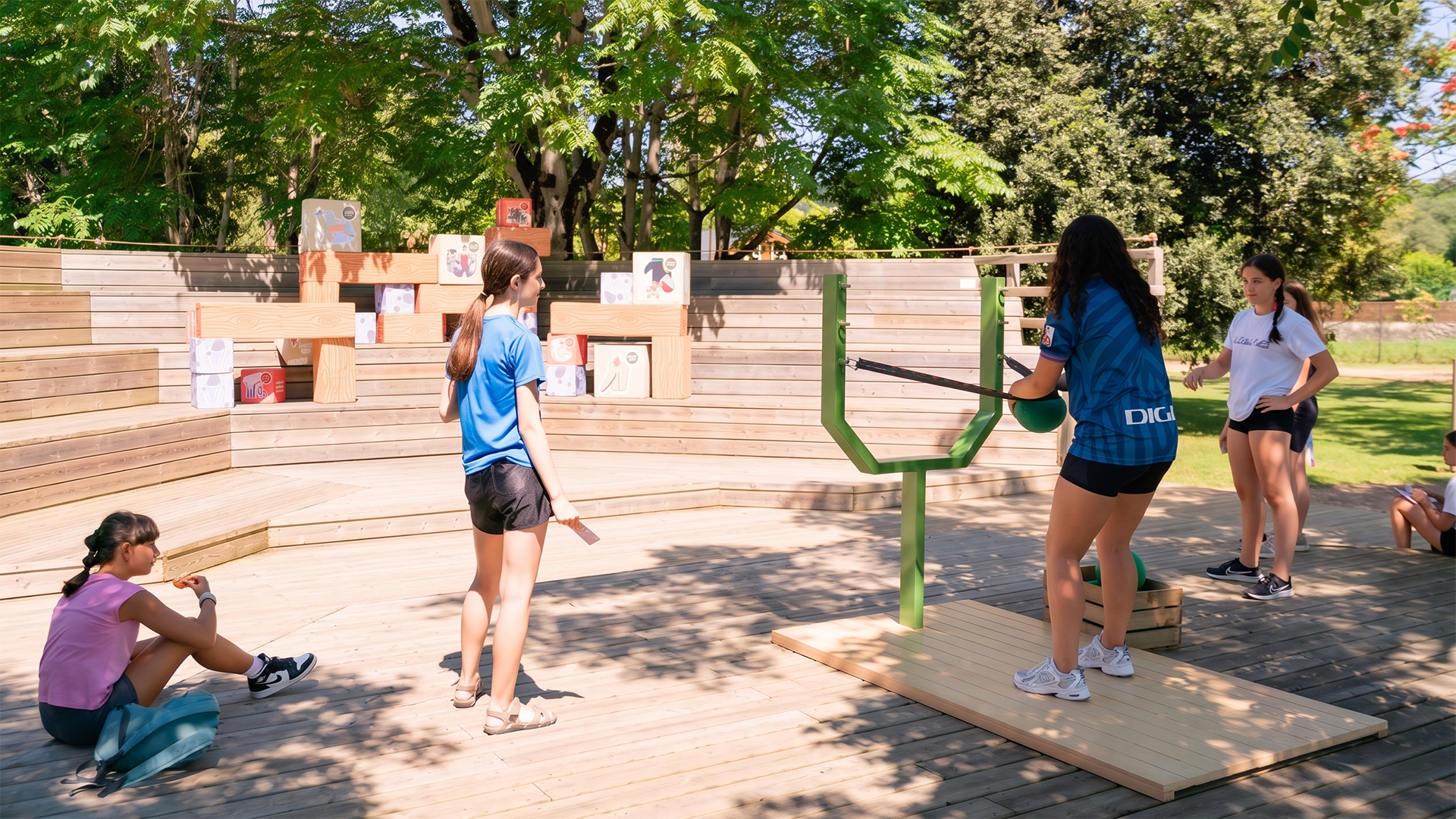
Decarbonisation turns emissions reduction into a game of aim, strategy and physical action. Using a large slingshot-style structure, participants must knock down blocks that represent polluting actions in order to help “decarbonise” the air we breathe.
The game introduces different scales of the climate problem, from everyday habits, such as using the car, to higher-impact industrial processes. In this way, decarbonisation stops being an abstract word and becomes a visible action that is easy to understand.
Cleaning the ocean: Identifying marine pollutants through cooperative play
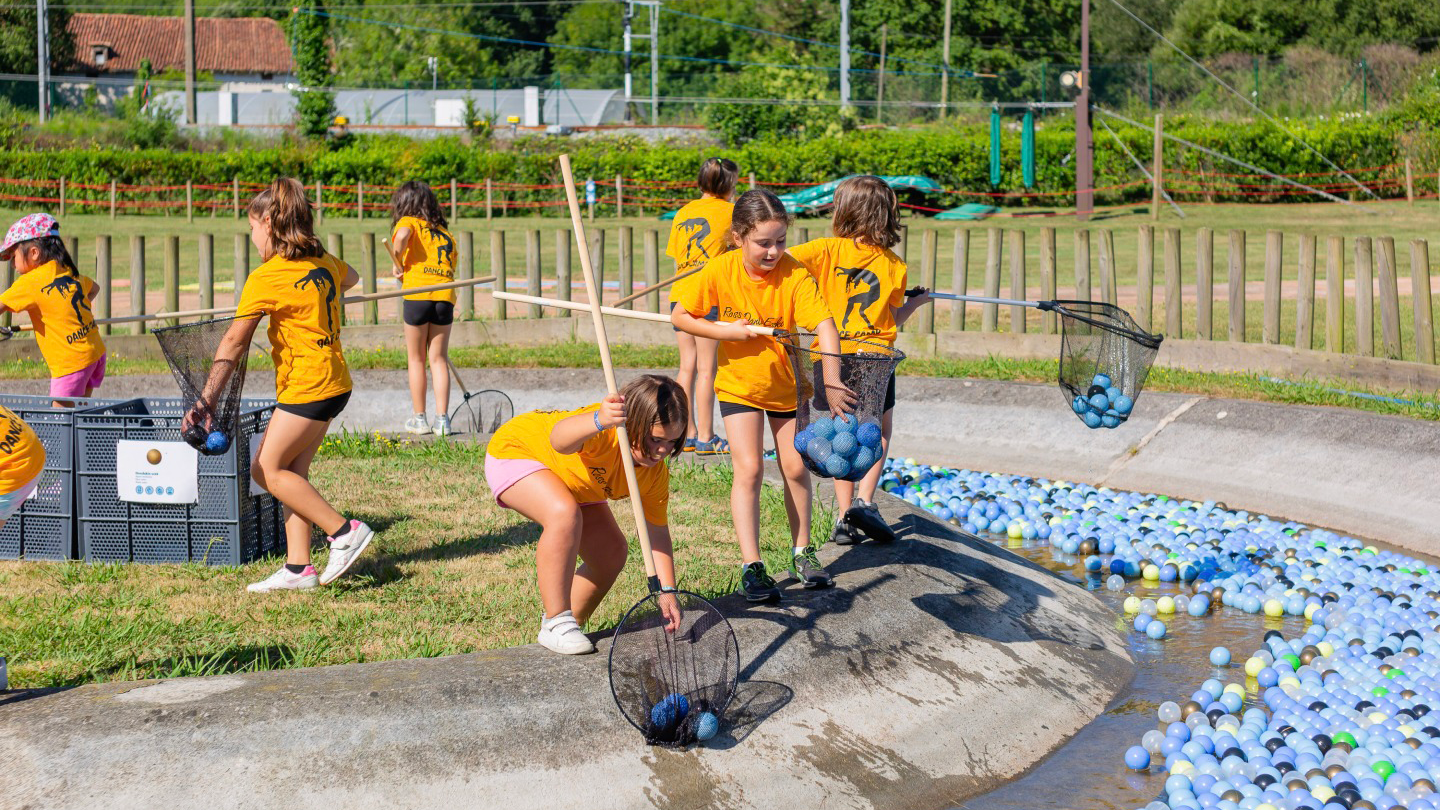
This installation starts from an existing pond in the park and transforms it into a cooperative play experience around water pollution. With the help of fishing nets, participants collect bioplastic balls of different colours, each associated with a type of pollutant found in seas and oceans.
The dynamic turns a simple action (fishing, collecting, classifying) into an intuitive way of talking about plastic waste and microplastics, chemical products, wastewater, oil and fuels. In this way, the water stops being just a play setting and becomes a symbolic space for understanding which types of pollution affect marine ecosystems.
- Sustainability
- Social impact
- Product and service design
- New narratives